Earth Day Trivia Questions and Answers
Earth Day is such a happy, feel-good day in our house. It’s the perfect excuse to get outside, plant something, and talk about how we can take better care of our planet. One of my favorite ways to make learning fun is with trivia games. Kids love a little friendly competition, and honestly, adults get just as into it!
If you’re planning an Earth Day activity at home, in the classroom, or even at a party, this list of Earth Day trivia questions and answers is a fun way to get everyone thinking about nature, animals, recycling, and the amazing world we live in. You can use these as a quiz game, write them on cards, or split everyone into teams.
Ready for some fun Earth Day trivia? Let’s go!
Easy Earth Day Trivia Questions
These are great for younger kids or as warm-up questions.
1. What day is Earth Day celebrated each year?
Answer: April 22.
2. What planet do we live on?
Answer: Earth.
3. What colors are often used to represent Earth Day?
Answer: Green and Blue.
4. What is the name for reusing materials instead of throwing them away?
Answer: Recycling.
5. What do trees give us that we need to breathe?
Answer: Oxygen.
6. What should you turn off when you leave a room to save electricity?
Answer: Lights.
7. What do we call trash that breaks down naturally?
Answer: Biodegradable waste.
8. What is the large body of salt water that covers most of Earth?
Answer: The ocean.
9. What is something you can plant on Earth Day?
Answer: A tree, flowers, or seeds.
10. What do bees help plants do?
Answer: Pollinate them.
11. What should you bring to the store instead of plastic bags?
Answer: Reusable bags.
12. What is frozen water called at the North and South Poles?
Answer: Ice.
13. What is the name for animals and plants living in their natural home?
Answer: Wildlife.
14. What should you do with bottles and cans instead of throwing them in the trash?
Answer: Recycle them.
15. What shines in the sky and gives Earth light during the day?
Answer: The sun.
Earth Day Trivia About Nature
These questions help kids learn more about the natural world around them.
1. What gas do plants take in from the air?
Answer: Carbon dioxide.
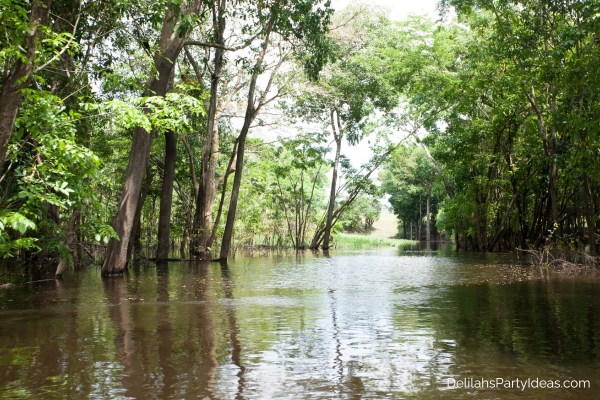
2. What is the largest rainforest in the world?
Answer: The Amazon Rainforest.
3. What do we call animals that are at risk of disappearing forever?
Answer: Endangered animals.
4. What type of animal is a frog?
Answer: An amphibian.
5. What is the tallest type of grass that pandas love to eat?
Answer: Bamboo.
6. What part of a plant grows underground?
Answer: Roots.
7. What natural resource falls from the sky and waters plants?
Answer: Rain.
8. What do we call a place where animals are protected and safe?
Answer: A wildlife sanctuary or nature reserve.
9. Which season usually has the most flowers blooming?
Answer: Spring.
10. What do caterpillars turn into?
Answer: Butterflies.
11. What animal is known for building dams in rivers?
Answer: A beaver.
12. What do we call land that is covered with many trees?
Answer: A forest.
13. What helps seeds travel through the air?
Answer: Wind.
14. What do plants need to grow besides water?
Answer: Sunlight and soil.
15. What animal is famous for moving very slowly and living in trees?
Answer: A sloth.
Recycling and Environment Trivia
These questions are great for classrooms and Earth Day discussions.
1. What are the three R’s of helping the Earth?
Answer: Reduce, Reuse, Recycle.
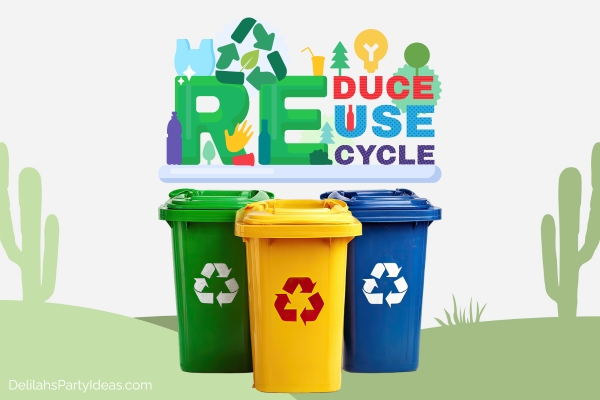
2. What color bin is commonly used for recycling in many places?
Answer: Blue (though it can vary by area).
3. Which material can be recycled many times without losing quality?
Answer: Aluminum.
4. What should you do with old newspapers instead of throwing them away?
Answer: Recycle them.
5. What type of energy comes from the sun?
Answer: Solar energy.
6. What energy comes from the wind?
Answer: Wind energy.
7. What do we call trash that ends up in the ocean or on the ground?
Answer: Litter.
8. What helps keep our air clean and fresh?
Answer: Trees and plants.
9. What kind of bottle is better for the environment to use again and again?
Answer: A reusable water bottle.
10. What happens when too much trash ends up in landfills?
Answer: It can harm the environment.
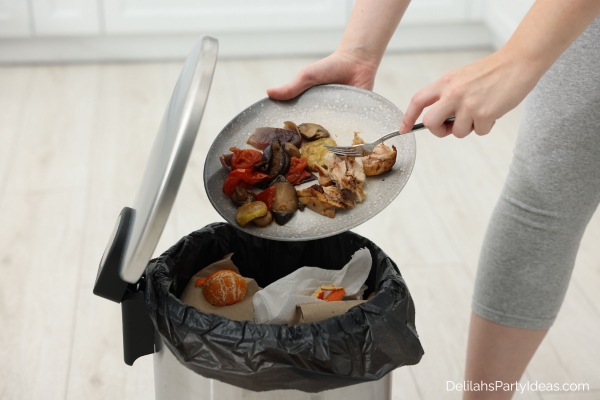
11. What should you do with food scraps to help the soil?
Answer: Compost them.
12. What kind of car uses electricity instead of gasoline?
Answer: An electric car.
13. What is it called when people pick up trash in parks or beaches?
Answer: A cleanup.
14. What is pollution?
Answer: Harmful materials in the environment.
15. Why is it important to save water?
Answer: Because clean water is limited and important for life.
Earth Day History Trivia
These are fun for older kids and teens.
In what year was the first Earth Day celebrated?
Answer: 1970.
Who helped start Earth Day?
Answer: Senator Gaylord Nelson.
Which country started Earth Day?
Answer: The United States.
Earth Day was created to raise awareness about what?
Answer: Protecting the environment.
How many countries now celebrate Earth Day?
Answer: Over 190 countries.
What type of events happen on Earth Day?
Answer: Cleanups, tree planting, and environmental activities.
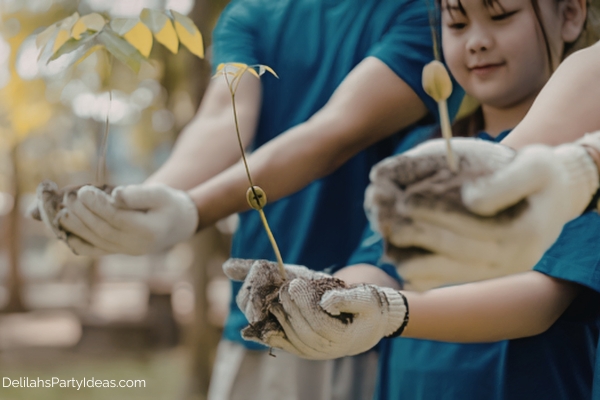
What is a common Earth Day activity for schools?
Answer: Planting trees or learning about recycling.
What symbol is often used to represent recycling?
Answer: The three chasing arrows symbol.
Earth Day encourages people to protect what two big natural systems?
Answer: Land and water.
What do many volunteers do in parks on Earth Day?
Answer: Pick up litter.
What is one goal of Earth Day education?
Answer: Teaching people how to care for the planet.
What is the message of Earth Day?
Answer: Take care of our planet.
Harder Earth Day Trivia (Great for Teens)
These questions are perfect if you want a bit more challenge.
- What layer of Earth protects us from harmful rays from the sun?
Answer: The ozone layer. - What is the term for warming of the Earth caused by gases in the atmosphere?
Answer: Global warming. - What do we call energy from the heat inside the Earth?
Answer: Geothermal energy. - What is the largest ocean on Earth?
Answer: The Pacific Ocean. - What do we call species that no longer exist?
Answer: Extinct species. - Which gas is the main cause of climate change?
Answer: Carbon dioxide. - What is deforestation?
Answer: Cutting down large numbers of trees. - What type of pollution affects the oceans the most?
Answer: Plastic pollution. - What is a habitat?
Answer: The natural home of a plant or animal. - What do we call power made from moving water?
Answer: Hydroelectric power. - What part of the Earth contains soil, rocks, and land?
Answer: The crust. - What is the name for protecting natural areas and wildlife?
Answer: Conservation. - What is one major threat to coral reefs?
Answer: Climate change and warming oceans. - What is the process plants use to make food using sunlight?
Answer: Photosynthesis. - What are fossil fuels made from?
Answer: Ancient plants and animals.
More Earth Day Trivia Questions
Ready to level up? These questions require a bit more environmental knowledge and are perfect for teens and adults who want a challenge.
How many species are estimated to go extinct every day due to human activities?
Answer: Approximately 150-200 species
This sobering statistic reminds us why conservation efforts are so critical. That’s thousands of species disappearing every year!
What is the most recycled material in the United States?
Answer: Aluminum (specifically aluminum cans)
Aluminum cans can be recycled indefinitely without losing quality. A recycled can could be back on the shelf as a new can in just 60 days!
How long does it take for a plastic bottle to decompose?
Answer: 450-1,000 years
Yep, you read that right. The plastic bottle you toss today could still be around when your great-great-great-great (keep going) grandchildren are born.
What is the Great Pacific Garbage Patch?
Answer: A massive collection of floating plastic and debris in the Pacific Ocean
This floating garbage island is estimated to be twice the size of Texas. It’s a stark reminder of our plastic problem and why reducing single-use plastics matters.
What percentage of the world’s oxygen is produced by the Amazon Rainforest?
Answer: About 20%
The Amazon is often called “the lungs of the Earth” for good reason. Protecting this incredible ecosystem is vital for our planet’s health.
How much water does the average American use per day?
Answer: About 80-100 gallons
That includes showers, flushing toilets, doing laundry, and everything else. Small conservation efforts really add up!
What endangered animal is the symbol of the World Wildlife Fund (WWF)?
Answer: The giant panda

The adorable giant panda has been WWF’s logo since 1961. Conservation efforts have helped pandas recover, and they were downgraded from “endangered” to “vulnerable” in 2016.
What percentage of plastic ever produced has been recycled?
Answer: Only about 9%
This shocking statistic reveals why reducing plastic consumption is even more important than recycling. About 12% has been incinerated, and the remaining 79% has ended up in landfills or the natural environment.
What does the term “carbon footprint” measure?
Answer: The total amount of greenhouse gases (primarily carbon dioxide) generated by a person, organization, event, or product
Understanding your carbon footprint is the first step toward reducing it!
What percentage of Earth’s land surface is covered by forests?
Answer: About 31%
Forests are crucial for biodiversity, climate regulation, and supporting human communities. Unfortunately, we lose millions of acres to deforestation each year.
Fun Bonus Round: True or False
Switch things up with this quick-fire round! These make great tiebreakers.
True or False: Glass takes over 1 million years to decompose.
Answer: True!
Glass is incredibly durable, which is great for recycling but terrible when it ends up in landfills.
True or False: Turning off the water while brushing your teeth can save up to 8 gallons per day.
Answer: True!
Small changes, big impact. That’s over 2,900 gallons per year!
True or False: Electric cars have zero environmental impact.
Answer: False
While electric vehicles produce fewer emissions than gas-powered cars, their production (especially batteries) and the source of their electricity do have environmental impacts. They’re still a much greener choice overall!
True or False: Honey bees pollinate about one-third of the food we eat.
Answer: True!
Bees are essential for our food supply. Protecting pollinators protects our plates!
True or False: The United States was the first country to sign the Paris Agreement.
Answer: False
The first countries to sign were small island nations most threatened by rising sea levels, including Fiji, Tuvalu, and the Maldives.
True or False: Recycling one aluminum can saves enough energy to power a TV for three hours.
Answer: True!
Recycling aluminum uses 95% less energy than creating new aluminum from raw materials.
Funny Earth Day Jokes
These are great to lighten the mood during the game.
- Why did the tree join the party?
Answer: Because it wanted to branch out! - What did the ocean say to the beach?
Answer: Nothing, it just waved. - Why are recycling jokes so funny?
Answer: They get reused again and again. - What kind of music do planets like?
Answer: Neptunes (tunes!). - Why did the sun go to school?
Answer: To get brighter. - Why did the gardener plant a light bulb?
Answer: They wanted a power plant. - What did one volcano say to the other?
Answer: I lava you! - Why are trees great friends?
Answer: They always stick around. - What did one tree say to the other tree?
Answer: I’m ready to turn over a new leaf!
How to Turn This Into a Fun Earth Day Game
If you’re planning this for kids or a classroom, here are a few easy ways to use these questions.
Team Trivia Challenge
Split everyone into small teams and take turns asking questions. Teams earn points for each correct answer.
Earth Day Quiz Show
Have one person be the host and read the questions out loud. Kids can raise their hands or write answers on paper.
Outdoor Earth Day Hunt
Write trivia questions on cards and hide them outside in the yard or playground. When kids find a card, they answer the question to earn points.
Family Game Night
After dinner, grab some snacks, ask the questions, and see who becomes the Earth Day trivia champion in your house.
Earth Day is such a wonderful time to slow down and think about how amazing our planet really is. Trivia games make learning fun, and kids often remember these little facts long after the game is over. Plus, it’s a simple way to start great conversations about nature, recycling, and how small actions can make a big difference.
You might even be surprised how competitive everyone gets once the questions start rolling! In our house, it quickly turns into a loud, laugh-filled game night.